2025: starting this academic year Coach Carr will be teaching a new course in Computer Science (CS) at the private high school in Kraków where he teaches mathematics. Let this page serve as a preview for those prospective students who might already be skilled enough to have an interest in side projects and game-jam team practice.
Let this page show students who might be Super HL that choosing CS can provide fascinating challenges without end.
Some kids get into computational thinking much earlier in life than do their peers. So for students who choose IB Computer Science High Level (HL) and already wield a programmer's mindset (and a pythonista's skillset), Coach Carr's collaborative side projects are designed to them highly engaged and continually advancing in software engineering's most utilitarian knowledge base
However, early experience is not necessary. Students who are new to programming can find their way from HL Computer Science into this optional and engineering-focused Super HL or OL (Orbit Level) by igniting within themselves a passion for puzzles.
The curriculum's actual lesson goals, assignments and course materials for the IB DP1 course in CS with Coach Carr are found on the high school's official website for enrolled students only.
Please note that the content here only pertains to side projects that "Orbit Level" students are expected to take on.
Programming is only a part of computer science. Let it be the extra fun part.
Let the textbook from Oxford University give you a preview of all other lessons and material that students can expect to encounter in IB examinations.
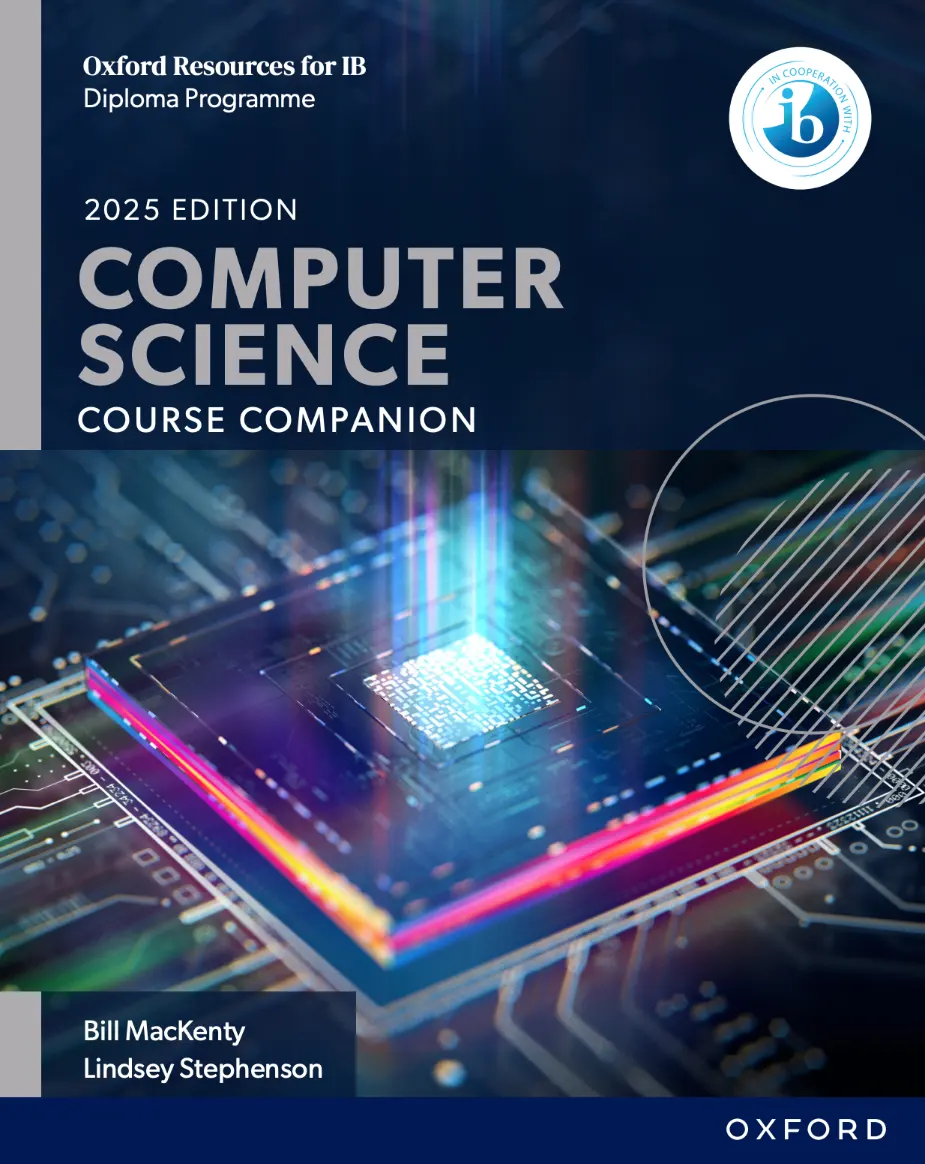
Oxford's CS textbook for this course
ISBN: 978-1382063920
There is another book required for the class, but first let's get this question out of the way - just what might a side project involve?
Even though advanced students can be tasked with hand coding a website from boilerplate HTML, CSS, JavaScript, PHP and SQL, the site can be rudimentary
This is because instead of web dev, the side projects in class have a focus on game dev.
Coach Carr has chosen Oxford's textbook (pictured above) The authors did not rely on pseudocode when they wrote their examples of algorithms and data structures. Instead, their snippets use the two programming languages found in the IB exam. (Students may choose between the two at the time of testing)
The textbook's code snippets were written in both Java and Python. Of course, all students will learn how to write computational solutions (and how to touch type at least 40wpm) but side projects and the Internal Assessment need not be in Java. Nor Python. And that holds for Standard Level, High Level, and ... let's call above HL the Orbit Level,
However, students at SL are encouraged to use Python for their Internal Assessment and avoid side projects. Python is featured in the textbook snippets and the standard material is challenging all on its own.
For OL students, writing languages like C and Lua serves to improve their code-reading ability and debugging skills. SL, HL, and OL education in any CS course should go way beyond code writing anyways.
Computer Science is a broad academic discipline that explores the theoretical foundations of computation. Coach Carr's class will push that academic envelope by including lessons that also explore the philosophical foundations of computation.
And so this class also requires that students have a hard copy (any edition) of the book Gödel, Escher, Bach
Gödel, Escher, Bach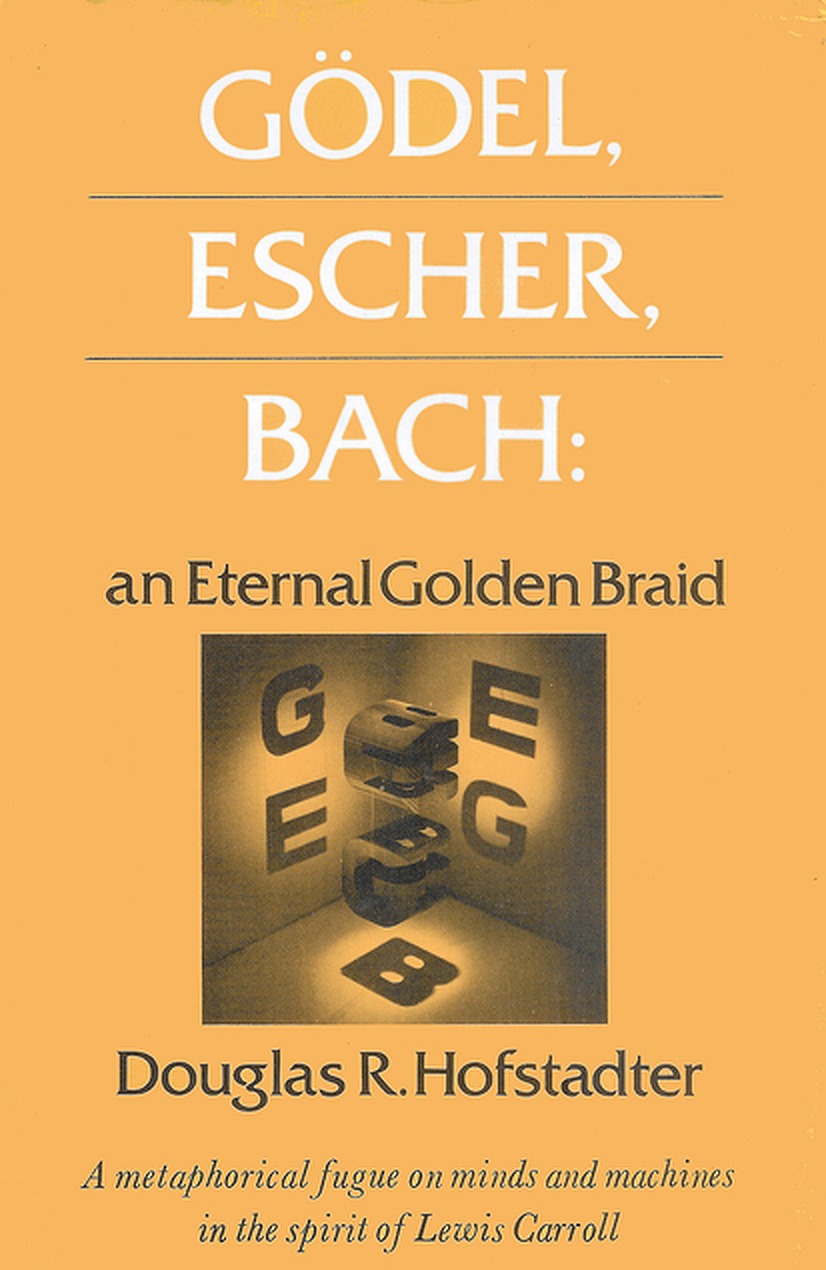
Any student may try out for the high school's Varsity Game Jam Team. Varsity team members will be student game devs who are capable of collaborating while competitively coding. Varsity letters are earned through the experience of representing the school in game jams and hackathons happening across Europe.

A Computer Science student who qualifies to become a TA (Teacher Assistant) is eligible for election onto the Council, which is comprised of faculty and students (Fall 2025 will start with no TAs because CS is new to the school)
The Council's mission is to foster inclusivity and community in the school's CS department. The C.S.S.C. shall meet twice per semester starting in 2026.
01010111 01100101 01101100 01100011 01101111 01101101 01100101 00100000 01110100 01101111 00100000 01000011 01101111 01101101 01110000 01110101 01110100 01100101 01110010 00100000 01010011 01100011 01101001 01100101 01101110 01100011 01100101 00100000 01110111 01101001 01110100 01101000 00100000 01000011 01101111 01100001 01100011 01101000 00100000 01000011 01100001 01110010 01110010
"There are only two kinds of programming languages: the ones people complain about and the ones nobody uses".
~ Bjarne Stroustrup
Programming Projects exist to ensure that the most brilliant students in the CS classroom are always challenged with something fascinating.
Coach Carr put together this Super HL tech stack to encourage collaboration in the classroom while providing game-dev challenges that impart software engineering skills of maximum utility. Side projects are meant to ensure an Orbit Level education in CS. Game development with C and Lua can help students get a 360 degree glimpse of the whole CS world.
Other than developing some basic web sites (frontend and backend) using the languages mentioned above, C and Lua are to be used at the Orbit Level.
C and Lua contrast greatly in syntax yet go quite well together for putting fundamental CS knowledge to practice. Coach Carr's classroom fully supports the syntax of both languages in side projects. Captains of the Varsity Game Jam Team should strive for experience writing C and Lua in the Playdate SDK
About how many lines of code in each language? OL students may read and write more Lua than they do C, yet will certainly use both C and Lua together in a single codebase to control hardware. The Fireship Channel can tell you a lot about C and Lua very quickly--
As Fireship said, C is the language "famous for making the world go 'round". This is a reasonable statement because C was used to write the kernels for the Windows, Mac, and Linux Operating Systems. C is ideal for OL Computer Science because it facilitates low-level control of hardware, giving students "close to the metal' coding challenges.
C and Lua go together like peanut butter and jelly. Code from both languages will be used in the same game project. ~ C and Lua control the Playdate ~
As Orbit Level students progress from fall to spring, more and more tech will go into their game-dev toolbox. And it all starts with the apps used for writing and running code.
Two things are needed to get started in OL Computer Science with Coach Carr: one thing for C and another thing for Lua.
CodeLite IDE . . . C Manual
Just setting up any particular programming environment on a random computer can snowball into an enormously challenging task. So before that proceeds, students install an Integrated Development Environment (IDE). And for programming in C, the IDE for this class is CodeLite, which supports several members of the C family.
Efforts to write C should make Lua seem super simple. Learning to code the management of memory empowers students with talent for engineering the fastest applications possible. This class will not cover all the details of C syntax. Though OL students may only scratch the surface of C, the CS learning experience from that scratch will be deeply beneficial. The IDE is a tool for writing and experimenting with C.
The first task is to install CodeLite
For picking up the syntax of Lua, the IDE that students will use is called ZeroBrane Studio (ZB) and will be used while frequenting the the official Lua reference manual found at www.lua.org.
ZB Studio IDE . . . Lua Manual
Side projects may use various frameworks and game engines throughout the academic year, but before tackling such external libraries, OL students will thoroughly study Lua's syntax and its standard libraries (outlined). For the most authoritative source, use the official Lua 5.1 reference at this link.
Quickly picking up Lua syntax entails some experimentation with its standard library. You can think of a library as a collection of prewritten functions, and think of Lua's standard libraries as a dozen containers filled with functions that Lua has built-in (though a library need not get compiled if it is not used by a programmer)
Standard libraries are internal to a programming language and putting them to use is the best way to quickly learn the language's syntax. Coding experiments with Lua's standard libraries will most thoroughly be done in the ZB IDE.
While riding the tram or waiting for an uber, students can play around with both languages. On a phone one is able to do very basic code experiments using an online compiler.
ZB makes an excellent testing ground as it implements LuaJIT and can run with all 5.x versions of Lua (5.1 to 5.4). It also features a built-in LÖVE interpreter. Eventually, Lua 5.1 will be directly installed on each student's computer so that it can be used from the "command line" without an IDE.
After ZB Studio and CodeLite outlive their usefulness, OL students will switch back to a text editor called VS Code which facilitates more projects and supports many other programming languages.
OL lessons cover the installation of all these tools step-by-step. And while OL students experiment with C and Lua, they shall gain a deeper understanding of formal language, pseudocode and Backus-Naur form, Students will also learn how to explain:
Software for this high school course is prescribed. Students must learn to utilize the same resources so that collaboration in the classroom has a common ground from which to spring
For the limited assignments in Super HL web dev throughout the year, students will use Firefox Developer Edition, reference the Mozilla Developers Network, and handle FTP with FileZilla
While students get comfortable with Lua's syntax and ZB Studio, they will also learn to use a sprite editor called Aseprite. It is a professional tool for making game graphics.
Getting Aseprite free from github will provide students with a lesson on building from source.
This game-dev tool has a Lua API, which means that students can readily extend the functionality of Aseprite in customized ways
If a map editor is needed for a 2D game project, then students can use either Tiled by default or LDtk by tactical choice. But that is if.
Students might not have any use for such editors if their plans do not call for maps. Tiled and LDtk are approved for class projects. However, using a map editor is optional because a game design might not have any kind of level scenery at all.
Students can also make use of a painting app called Krita and the online image editor Photopea. (or use GIMP offline). In the spring, development in 3D will necessitate some familiarity with Blender and Material Maker.
Students can record and mix audio for their projects in Audacity, produce digital music tracks with LMMS, and make sound effects with the LMMS NEScaline module.
Collaborative efforts on a project require that all students use tools from the same specified set, listed here on this page..

These side projects are optional and meant only for CS students who are predisposed to taking on extraordinary coding challenges.
There are 3 different levels of programming projects using the handheld console and Orbit Level students can always be active in the Playdate SDK.
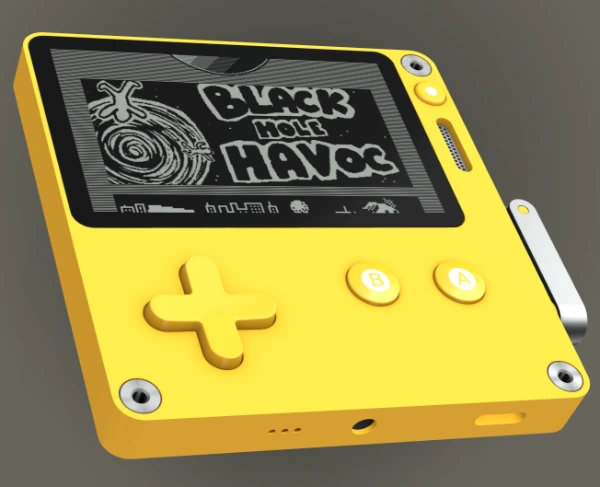
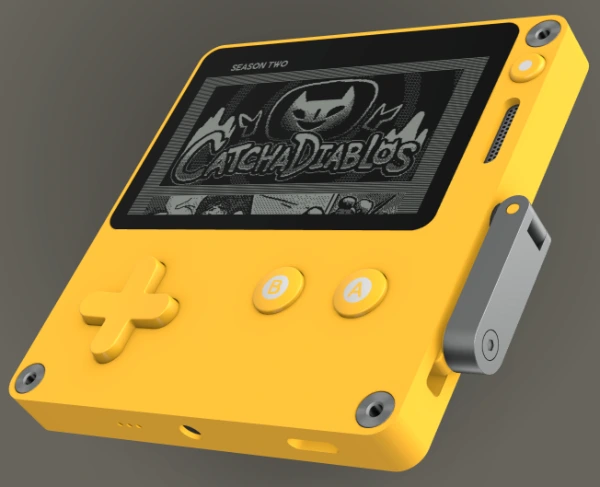
The primary platform for OL engineering is a handheld gaming console called the Playdate.
C and Lua are native to the Playdate and the SDK lets 2D game logic take fast control of the hardware on which it runs. The console is developer-friendly and welcomes the side-loading of games and apps.
After they first work with LÖVE for a small side project, OL students level-up their engineering chops by way of the Playdate SDK, beginning with pure Lua.
More advanced Playdate projects will involve both Lua (5.1 within 5.4) and the C programming languages. Both can be used in the same game project using the APIs in the Playdate SDK. (Software Development Kit)
LÖVE will be the first development tool in support of game jamming. Playdates are geared to be the primary platform for OL students, but LÖVE should be the first. It doesn't qualify as a "game engine" but it is a highly reputable game-dev framework. Students write code with LÖVE using Lua 5.1. LÖVE implements LuaJIT and games made with it can run on computers, phones, tablets and game consoles.

LÖVE is an "awesome" Lua framework with a reputation for being lightweight and straightforward, which makes it a simple solution for game jammers.
LÖVE is popular among professionals. It is the framework used in 2024's award-winning game Balatro which is available on every major platform. PCs, Macs, Chromebooks, Xboxes, Switches, PlayStations, SteamDecks, Androids, and iPhones can all play games made with LÖVE
Defold is more than just another framework that OL students can use for side-projects: Defold is a high performance, full featured game engine that includes a visual editor, scene editor, tilemap editor, code editor, debugger...
Defold introduces students to a cross-platform 3D-capable game engine (optionally) Defold side-projects can be supported after OL students finish a couple of challenging Playdate projects. The Defold engine makes game publishing anywhere really easy
Students code with Lua 5.1 (or Teal) in the Defold engine, which implements LuaJIT. and can be extended using C "with Classes" (C++) Games made in Defold can be easily published to every major platform
Just press a button to package the same codebase for Web/ HTML5, Nintendo, Sony PS5/4, Microsoft, Google/ Android, Apple/ iOS
Defold is a 3D engine that excels at making 2D games,(and 2.5D games) so students need not have their side project add a full spatial dimension to their code if they are not so inclined. Choose 2D, 2.5D, or 3D in Defold.
Lua is quite elegantly a dynamically-typed language, yet in using Defold, students can practice writing statically-typed Lua code by way of Teal...
Any student who is learning Lua is also learning almost all of Teal without any extra effort. This is because Teal is a dialect of Lua, or more like a linter for it
Teal code compiles into .lua files. Teal and Lua are almost the same language except for one simple yet significant difference. So anyone who knows Lua pretty much knows Teal as well
Defold: approved for a side-project or game jam training (and optional)
MoonScript for jams will be supported for OL students who advance to a DP2 year of CS. MoonScript compiles to Lua.

A side-project in the spring can target development for multiplayer experiences in 3D using the Roblox game engine, which implements a superset of Lua 5.1 called Luau. and features voxel terrain generation in its level editor.
Coach Carr reasons that this game engine is a great way to teach OL students how to code a project that is heavily reliant upon client-server communications.
Luau programming knowledge has considerable relevance for game developers as the Roblox platform is projected to grow beyond 100,000,000 Daily active users in the coming years.
SL+ students who are coding for their very first time should stick with Python and not concern themselves with the syntax of C. These Python tools are side-project options for those who are not ready for HL or OL, but want to push the limits of Standard Level.
PyGame CE is a Python learning tool made available to students of all levels.
(btw, the class IDE for exercises and projects in Python is Spyder)
PyGame Community Edition is fantastic for 2D game development and provides lots of resources for students looking to grow as a Pythonista.
GODOT might very well be the best option for 3D game development with Python. (GDScript is the engine's native scripting language and it is highly similar to Python) GODOT is not what the world's biggest studios use but it is highly capable and unlike engines Unity and Unreal, GODOT is always totally free no matter the commercial success of a game. (So is Defold, and LÖVE, and PyGameCE)
Even though GODOT has a scripting language created just for the engine, there is a strong Python binding that allows Pythonistas to script with their preferred syntax. The same goes for Luau in Godot,
Luau is a superset fork of Lua 5.1 and the API for the Roblox engine. Luau bindings let game-devs write in GODOT the way they write in Roblox Studio (of course, there's also bindings for pure Lua 5.1 JIT
HL / OL students in their first-ever year of coding would be wise to use the Python binding, as it's one of the languages in the IB exam. Any other scripting option for the GODOT engine must be approved by Coach Carr.

Because side projects can make a progression from 2D to 3D game development (which includes world/ level design and 3D model manipulation) OL students should have a powerful computer. MacBook (Apple silicon) is highly recommended but a Windows laptop that has a dedicated GPU will suffice. Chromebooks won't work for this class.
An ARM processor Mac is preferred over a PC because MacOS is Unix-based (as is the world wide web) and students will be doing web dev and game dev, not gaming.
The other piece of hardware useful on the Varsity Game Jam Team is a Playdate. The Playdate SDK gives OL students the awesome challenge of close to the metal programming
The Playdate has a 168 MHz ARM Cortex-M7 processor, 16 MB of RAM, and 4 GB of flash storage.
Playdate is an awesome tool for education because of the way it welcomes the development of games in both C and Lua.
For example, here is a list of the 4 extremely troublesome coding challenges that are constantly encountered by programmers:
A course of live lessons in Computer Science is available only to students at the prep school where Coach Carr also teaches mathematics. This page is here as an Orbit Level brochure of CS courses (and the Varsity Game Jam Team) of that private high school on the Vistula river.
If you aren't a Krakówian and enrolled there, then you cannot take Coach Carr's CS course. However, if he has time available on his private tutoring calendar, he can still help you learn to code. If you're looking for online tutoring that is specific to scripting with Lua, then just apply through the button below